Driving in Italy
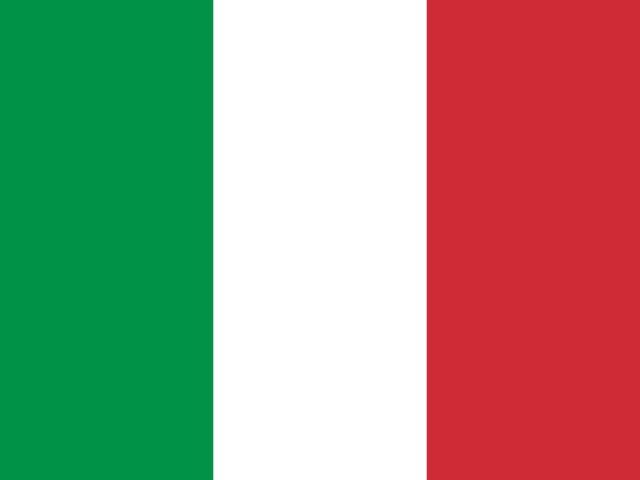 Driving in Italy
The licence plates you will see on the road in Italy, how to read them, and what a car from abroad needs.
Speed limits
Default limits for cars, unless signs say otherwise, as on the signs at border crossings.
- In towns
- 50 km/h
- Outside towns
- 90 km/h
- Expressways
- 110 km/h
- Motorways
- 130 km/h
110 km/h on motorways in rain or snow.
Before you drive
- Vignette and tolls
- There is no vignette. Most motorways (autostrade) charge a toll, usually by distance travelled; you pay when you leave the motorway, at booths that take cash, cards or the Telepass tag.
- Environmental zones
- About 350 towns close their historic centres to non-residents at set times as limited traffic zones (ZTL), enforced by cameras. Driving in without a permit brings a fine of 83 to 332 euros. Many ZTLs also act as low-emission zones, explained on a small Italian-only panel under the entry sign, and Milan and Palermo charge a fee to enter.
Rules and prices change. Check the official site before you travel.
Country code
Cars registered here show the country code I. Plates carry it on the blue EU band, which counts as the country sign: no separate oval sticker is needed in the European Economic Area, and the plate is also valid in other countries of the Vienna Convention on Road Traffic. A car from abroad shows its own country code at the rear in the same way.
Reading the plates
Plates carry no regional code, so the letters and numbers do not tell where a car is from.
These codes are from the previous system (1927–1994). Plates issued today carry no regional code, but older cars still have these. Area codes on the map
Plates you will see
- AB 123 CD
Standard · Since 1994
Older plates still on the road
- VR A58322
Standard · 1985–1994
- MI 123456
Standard · 1927–1985
Plate formats and history of Italy